
Editorial disclosure: this is an educational game guide. Our site may earn commission from partner links elsewhere; these lessons contain no paid recommendations.
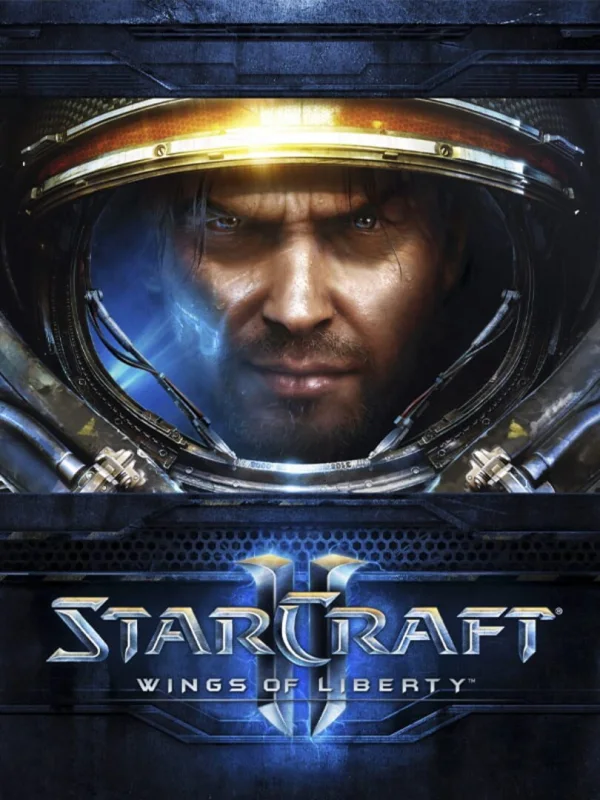
What is StarCraft II?
StarCraft II is a real-time strategy. Build an economy and army that can defeat the opponent while adapting to scouting information. This library connects the basic objective to the decisions you will see in a replay or broadcast. Start with the first lesson if the terminology is new; use the later lessons when you want to understand preparation, execution and why a result happened.
The match centre and the learning library answer different questions. Fixtures and results tell you who played and what the provider recorded. The guides explain how to inspect the decisions behind a game. A scoreboard alone cannot show every resource, positioning choice or missed opportunity. Use the actual match sequence when reviewing those details.
Three illustrated field manuals
Each guide includes a decision diagram, a step-by-step lesson, a comparison table, an illustrative scenario and a replay worksheet. Follow the sequence below or open the topic that matches the problem you want to understand.
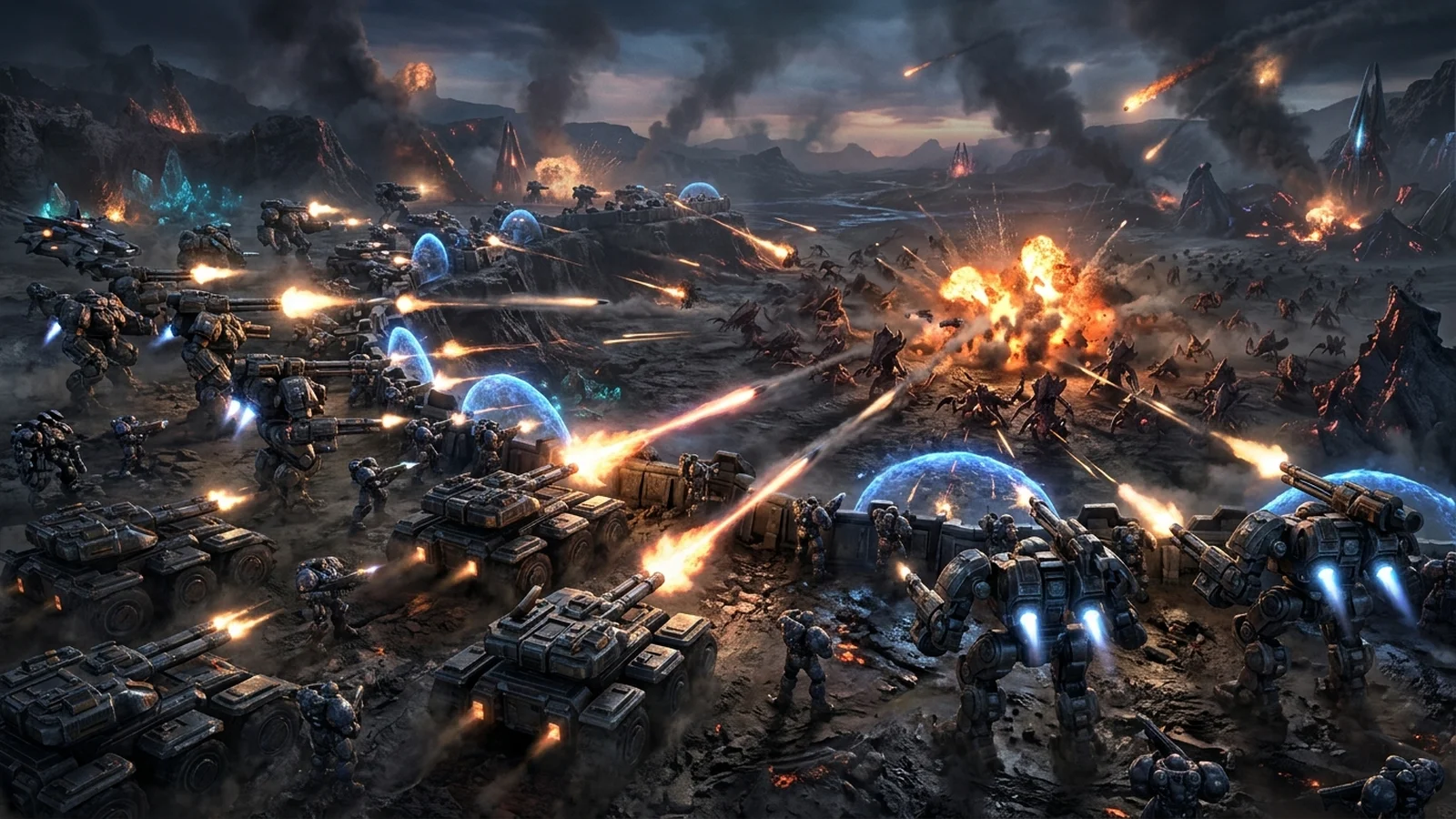 FIELD MANUAL 01
StarCraft II economy, production and macro habits
An economy supports a plan only when resources become useful units and technology. This guide builds a review routine around collection, production and capacity.
Read the illustrated guide ↗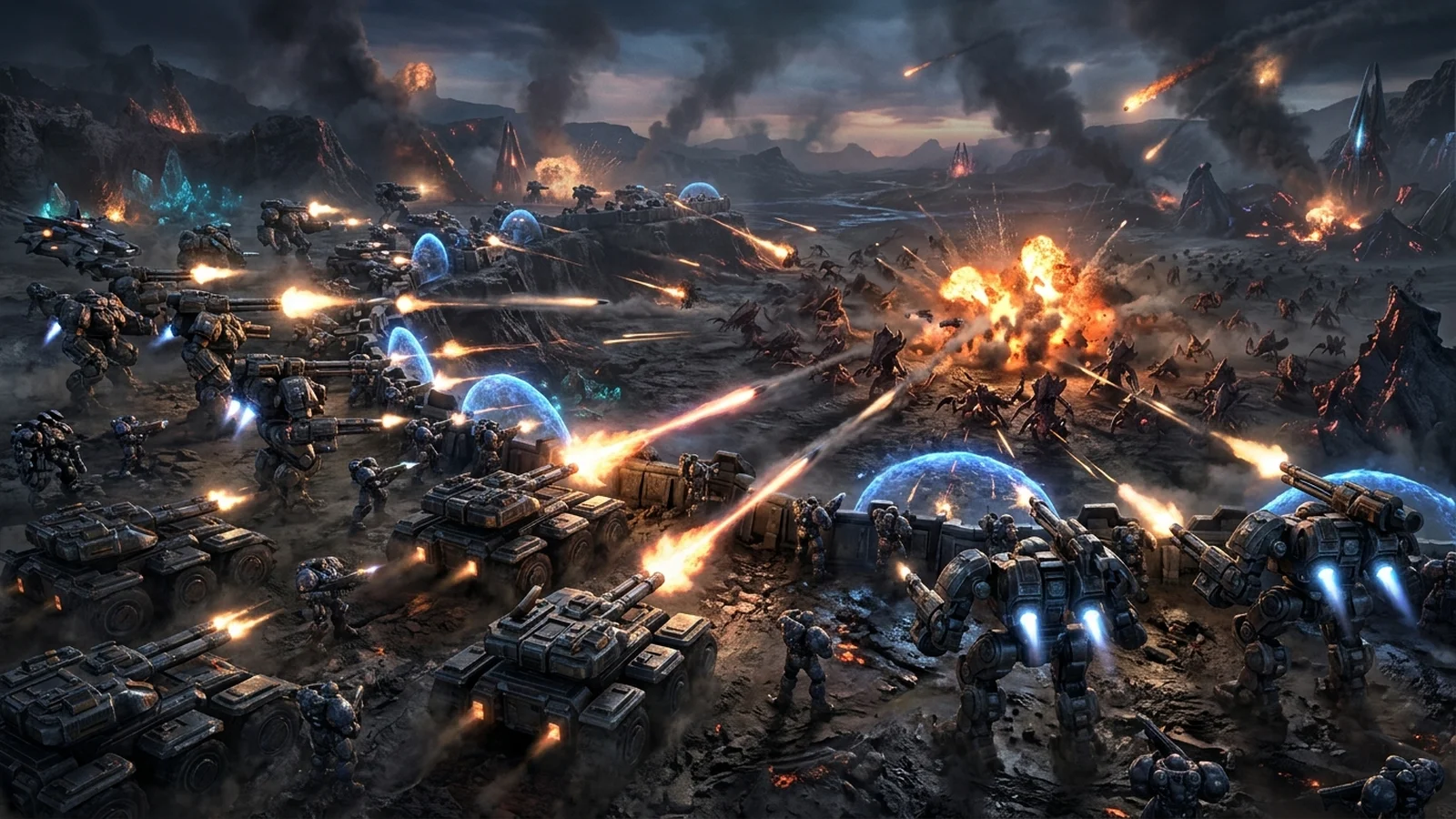 FIELD MANUAL 02
StarCraft II scouting and build-order adaptation
A build order is a starting plan. Scouting tells you when following it unchanged would ignore an approaching threat.
Read the illustrated guide ↗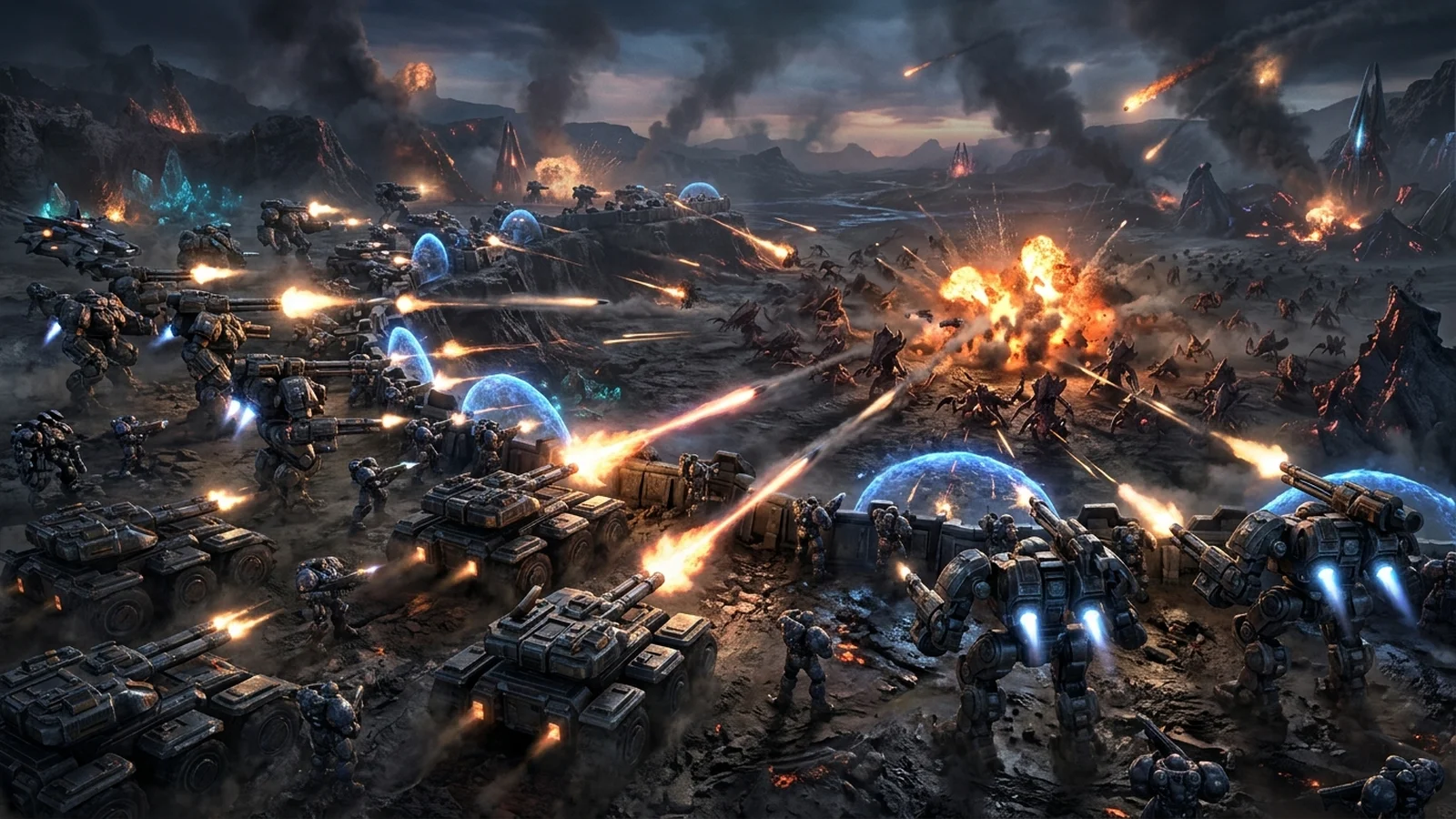 FIELD MANUAL 03
StarCraft II army positioning and engagement review
Army strength depends on composition, positioning and reinforcement access. A larger supply number can still enter a fight on unsuitable terrain.
Read the illustrated guide ↗Roles and responsibilities
These are useful ways to describe the work a player performs. They are not rigid labels, personal rankings or claims about the current professional meta. Event format, team composition and the game state can change who performs a job.
| Role or task | What to look for |
|---|---|
| Economy | Keep worker production and resource collection purposeful. |
| Production | Convert income into units, upgrades and capacity. |
| Scouting | Identify threats and test assumptions about the opponent. |
| Army control | Use positioning and engagements that suit the composition. |
1. StarCraft II economy, production and macro habits
An economy supports a plan only when resources become useful units and technology. This guide builds a review routine around collection, production and capacity.
Check whether your opening maintains workers while building the units it needs. Pausing production should be a deliberate response to an immediate threat or planned timing. Habitual gaps can weaken a later expansion even when the early army looks healthy.
Watch supply before a block stops the planned unit cycle. Include supply construction in the same routine as worker and army production. A replay can show when the warning first became visible, which is more useful than noticing the completed supply block afterward.
Avoid: Reading a resource bank as an advantage without checking what is being produced.
2. StarCraft II scouting and build-order adaptation
A build order is a starting plan. Scouting tells you when following it unchanged would ignore an approaching threat.
Choose what you need to know: expansion timing, early aggression, technology or army composition. Sending a scout without an information goal makes it hard to judge the result. Record what the scout sees and what remains hidden behind the opponent’s position.
When a threat is plausible, change the relevant production, defensive position or scout timing. Preserve the parts of the economy that remain safe. Panic reactions can overproduce defence and surrender the long game even after the immediate threat is handled.
Avoid: Treating a memorised opening as a script that must never change.
3. StarCraft II army positioning and engagement review
Army strength depends on composition, positioning and reinforcement access. A larger supply number can still enter a fight on unsuitable terrain.
Decide whether the composition wants range, room to spread, a narrow defence or a protected approach. Compare that need with the selected route. Moving all units directly toward the enemy can surrender the terrain that makes their composition effective.
Confirm the visible enemy composition and any important technology before choosing an angle. If information is incomplete, preserve an exit and avoid interpreting a small visible force as the entire army. Positioning should reflect what you know and what remains uncertain.
Avoid: Using army supply alone to judge who should win an engagement.
How to read a StarCraft II match
- Worker and base context
- Unspent resources and production gaps
- Scouted technology and timing attacks
Before following the result, confirm the event, selected game version, scheduled time and match format. A best-of-series score is different from an individual map or game score. Some event formats add further conditions, so the organiser’s rules take precedence over assumptions drawn from a familiar tournament.
Choose one sequence and pause before the important decision. Identify which players can participate and what information is actually available. Then describe the consequence: a safer route, a resource spent, access to the objective or a lost opportunity. This produces a useful explanation without turning a small sample into a prediction.
Open the game-specific match centre below, the team directory or the tournament directory for available records. Historical data and missing fields have limits; a missing match is not a claim that the game has no active competition.
StarCraft II questions
Where should a beginner start?
Read the first field manual and identify the roles or tasks in one recorded game. Learn the objective before copying a professional setup. Once you can explain why a player acts, move to the preparation and review lessons.
Are these live patch rankings?
No. The library teaches decision-making. Check current publisher notes and the event rulebook for exact timings, costs, restrictions, map pools and formats. We do not present a permanent best build or guaranteed winning strategy.
Why can the match centre be empty?
It only displays records available in the provider snapshot. Coverage is not exhaustive. Live and upcoming records also depend on freshness checks. Use the publisher or tournament organiser to confirm an event outside that coverage.
Can I use the diagrams as map layouts?
The diagrams are editorial checklists. They show the order of learning and decision checks; they are not official maps, gameplay screenshots or evidence of an experiment.
Scope and limitations
- Examples are illustrative teaching scenarios, not claims of hands-on match testing or guaranteed outcomes.
- Balance changes and event settings can change the correct implementation; confirm the current rules before using a fixed build or sequence.
- The match centre shows only available provider records. Missing information is not evidence that no tournament or match exists.
Sources and editorial method
StarCraft II: official publisher reference establishes the game context. The practice checkpoints and examples are original editorial analysis prepared with AI assistance. Diagrams are educational artwork, not evidence of a played match. For match times, event formats and restrictions, use the current organiser announcement. See our match-data method and editorial standards for attribution and data limits.
 ByuN
 SHIN
 GuMiHo