
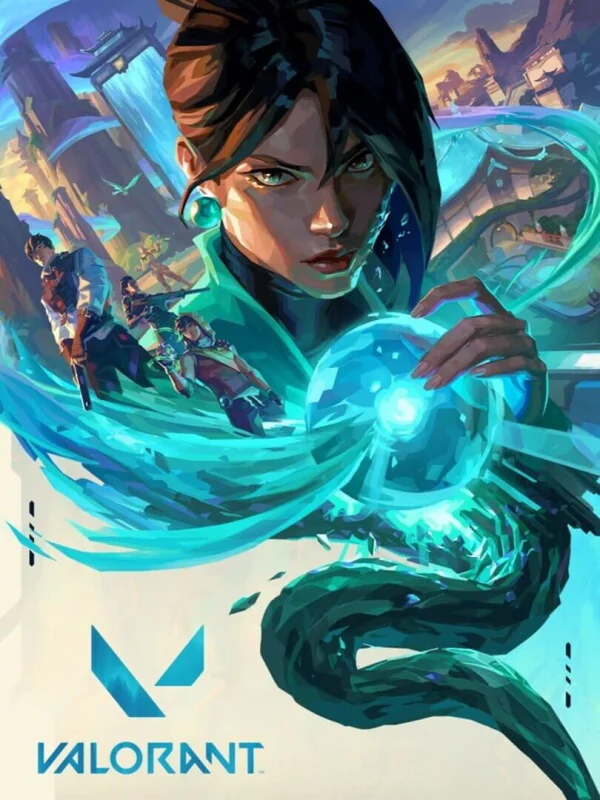
Editorial disclosure: this is an educational game guide. Our site may earn commission from partner links elsewhere; these lessons contain no paid recommendations.
What is Valorant?
Valorant is a tactical hero shooter. Win attack and defence rounds around the Spike while coordinating agent abilities, credit spending and site control. This library connects the basic objective to the decisions you will see in a replay or broadcast. Start with the first lesson if the terminology is new; use the later lessons when you want to understand preparation, execution and why a result happened.
The match centre and the learning library answer different questions. Fixtures and results tell you who played and what the provider recorded. The guides explain how to inspect the decisions behind a game. A scoreboard alone cannot show every resource, positioning choice or missed opportunity. Use the actual match sequence when reviewing those details.
Three illustrated field manuals
Each guide includes a decision diagram, a step-by-step lesson, a comparison table, an illustrative scenario and a replay worksheet. Follow the sequence below or open the topic that matches the problem you want to understand.
 FIELD MANUAL 01
Valorant agent roles and team composition
Agent roles describe tools, not permission to play alone. Build a composition around how the team enters, holds and retakes space on the selected map.
Read the illustrated guide ↗ FIELD MANUAL 02
Valorant economy and coordinated team buys
Credit decisions affect more than the weapon in your hand. The team needs enough firepower and abilities to carry out a shared round plan.
Read the illustrated guide ↗ FIELD MANUAL 03
Valorant post-plant, retake and concise communication
After a plant, time and Spike access become central. Positioning should protect information and let teammates respond together.
Read the illustrated guide ↗Roles and responsibilities
These are useful ways to describe the work a player performs. They are not rigid labels, personal rankings or claims about the current professional meta. Event format, team composition and the game state can change who performs a job.
| Role or task | What to look for |
|---|---|
| Duelist | Help create first-contact space with team support. |
| Initiator | Gather information and disrupt defenders before contact. |
| Controller | Shape sightlines so teammates can cross or hold space. |
| Sentinel | Protect space, flanks and defensive setups. |
1. Valorant agent roles and team composition
Agent roles describe tools, not permission to play alone. Build a composition around how the team enters, holds and retakes space on the selected map.
A duelist needs an entry route, an initiator needs an information or disruption target, a controller needs useful sightlines and a sentinel needs space to protect. Discuss those jobs before the round rather than assuming the agent portrait communicates the entire plan.
Long crossings, narrow entrances and exposed plant positions create different utility demands. Decide which routes the team can actually support. A composition copied from a broadcast can fail if the players do not know the timing or follow-up that makes its tools work.
Avoid: Treating role labels as fixed score expectations or an automatic tier list.
2. Valorant economy and coordinated team buys
Credit decisions affect more than the weapon in your hand. The team needs enough firepower and abilities to carry out a shared round plan.
During buy time, compare weapons, armour, ability needs and the ability to drop a weapon. One fully equipped player alongside several weak buys is not necessarily a strong team round. Agree whether the goal is to compete now or preserve a stronger next purchase.
A controller without the utility needed to cross a key line can limit the whole execute. Prioritise the abilities the plan requires instead of automatically buying the most expensive gun. Exact costs and interactions should be checked in the current client after balance changes.
Avoid: Spending every available credit without checking the next team buy.
3. Valorant post-plant, retake and concise communication
After a plant, time and Spike access become central. Positioning should protect information and let teammates respond together.
Before planting, ask which surviving positions can watch or contest the Spike. A safe plant now can become difficult to defend if no teammate can see the defuse path. Avoid treating plant completion as the end of the round plan.
Group when time permits, clear the route together and decide who checks the Spike. If utility is available, use it to separate defenders or protect movement. A solo entry followed by several delayed entries lets the post-plant side fight isolated opponents.
Avoid: Communicating speculation as a confirmed enemy location.
More from the existing guide library
How to read a Valorant match
- Ability combinations before first contact
- Team credits and buy agreement
- Spike position, time and post-plant angles
Before following the result, confirm the event, selected game version, scheduled time and match format. A best-of-series score is different from an individual map or game score. Some event formats add further conditions, so the organiser’s rules take precedence over assumptions drawn from a familiar tournament.
Choose one sequence and pause before the important decision. Identify which players can participate and what information is actually available. Then describe the consequence: a safer route, a resource spent, access to the objective or a lost opportunity. This produces a useful explanation without turning a small sample into a prediction.
Open the game-specific match centre below, the team directory or the tournament directory for available records. Historical data and missing fields have limits; a missing match is not a claim that the game has no active competition.
Valorant questions
Where should a beginner start?
Read the first field manual and identify the roles or tasks in one recorded game. Learn the objective before copying a professional setup. Once you can explain why a player acts, move to the preparation and review lessons.
Are these live patch rankings?
No. The library teaches decision-making. Check current publisher notes and the event rulebook for exact timings, costs, restrictions, map pools and formats. We do not present a permanent best build or guaranteed winning strategy.
Why can the match centre be empty?
It only displays records available in the provider snapshot. Coverage is not exhaustive. Live and upcoming records also depend on freshness checks. Use the publisher or tournament organiser to confirm an event outside that coverage.
Can I use the diagrams as map layouts?
The diagrams are editorial checklists. They show the order of learning and decision checks; they are not official maps, gameplay screenshots or evidence of an experiment.
Scope and limitations
- Examples are illustrative teaching scenarios, not claims of hands-on match testing or guaranteed outcomes.
- Balance changes and event settings can change the correct implementation; confirm the current rules before using a fixed build or sequence.
- The match centre shows only available provider records. Missing information is not evidence that no tournament or match exists.
Sources and editorial method
Valorant: official publisher reference establishes the game context. The practice checkpoints and examples are original editorial analysis prepared with AI assistance. Diagrams are educational artwork, not evidence of a played match. For match times, event formats and restrictions, use the current organiser announcement. See our match-data method and editorial standards for attribution and data limits.
 CGN Esports
 Eintracht Frankfurt
 FUT Esports
 Fire Flux Esports
 G2 Gozen
 MIBR GC
 Shopify Rebellion Gold
 SK Nebula
 Nova Esports
 Dragon Ranger Gaming
 BBL Esports
 Gen.G GC
 FENNEL Female
 Team Liquid Brazil
 Nova Esports GC