
Editorial disclosure: this is an educational game guide. Our site may earn commission from partner links elsewhere; these lessons contain no paid recommendations.
What is Counter-Strike 2?
Counter-Strike 2 is a tactical shooter. Win rounds through coordinated attack or defence of bomb sites, with purchases and surviving equipment shaping later rounds. This library connects the basic objective to the decisions you will see in a replay or broadcast. Start with the first lesson if the terminology is new; use the later lessons when you want to understand preparation, execution and why a result happened.
The match centre and the learning library answer different questions. Fixtures and results tell you who played and what the provider recorded. The guides explain how to inspect the decisions behind a game. A scoreboard alone cannot show every resource, positioning choice or missed opportunity. Use the actual match sequence when reviewing those details.
Three illustrated field manuals
Each guide includes a decision diagram, a step-by-step lesson, a comparison table, an illustrative scenario and a replay worksheet. Follow the sequence below or open the topic that matches the problem you want to understand.
 FIELD MANUAL 01
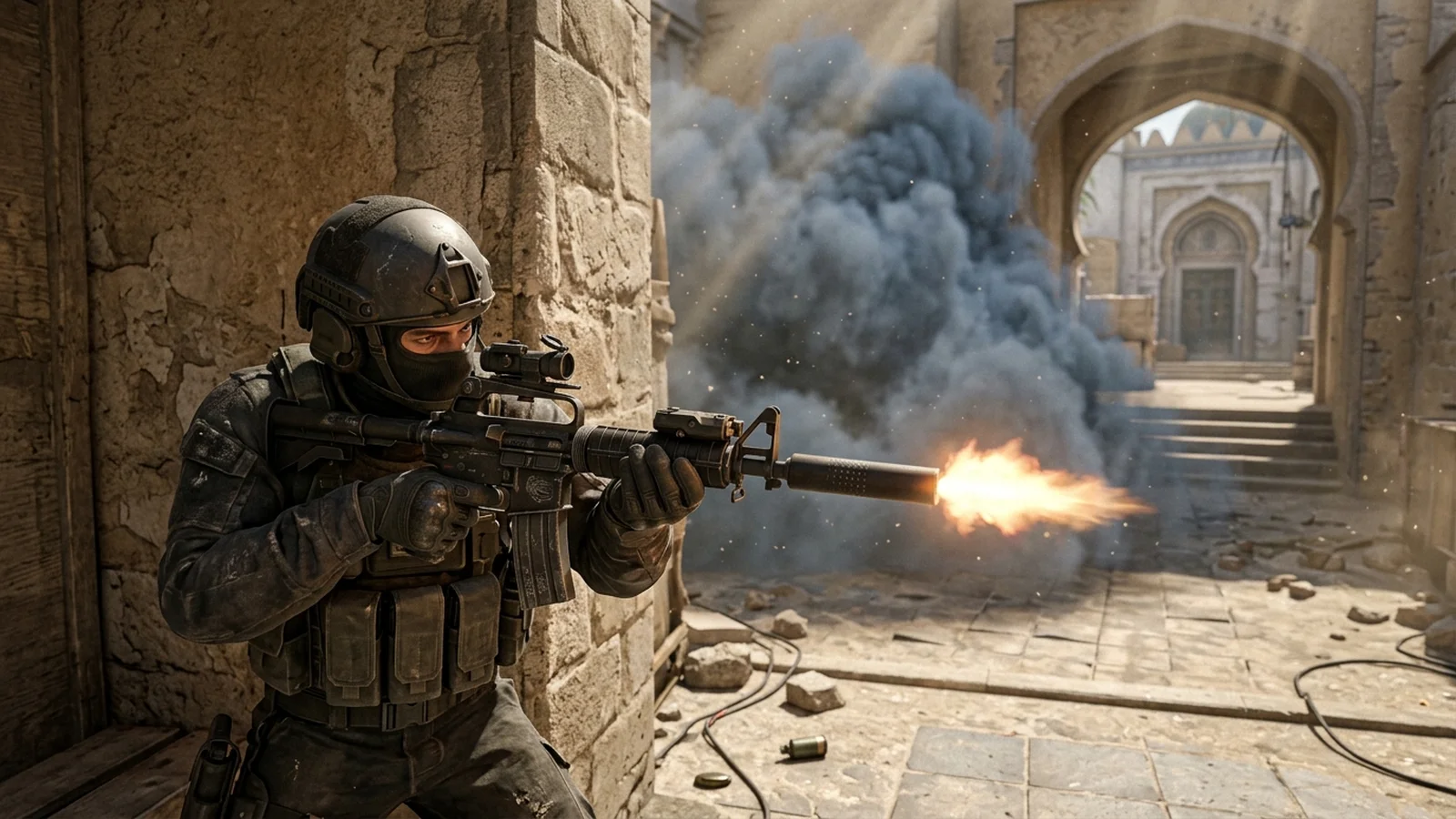
CS2 trading, spacing and crosshair placement
Aim becomes useful when your teammate can survive or trade the same contact. This guide connects crosshair preparation with distance between players and the order in which angles are cleared.
Read the illustrated guide ↗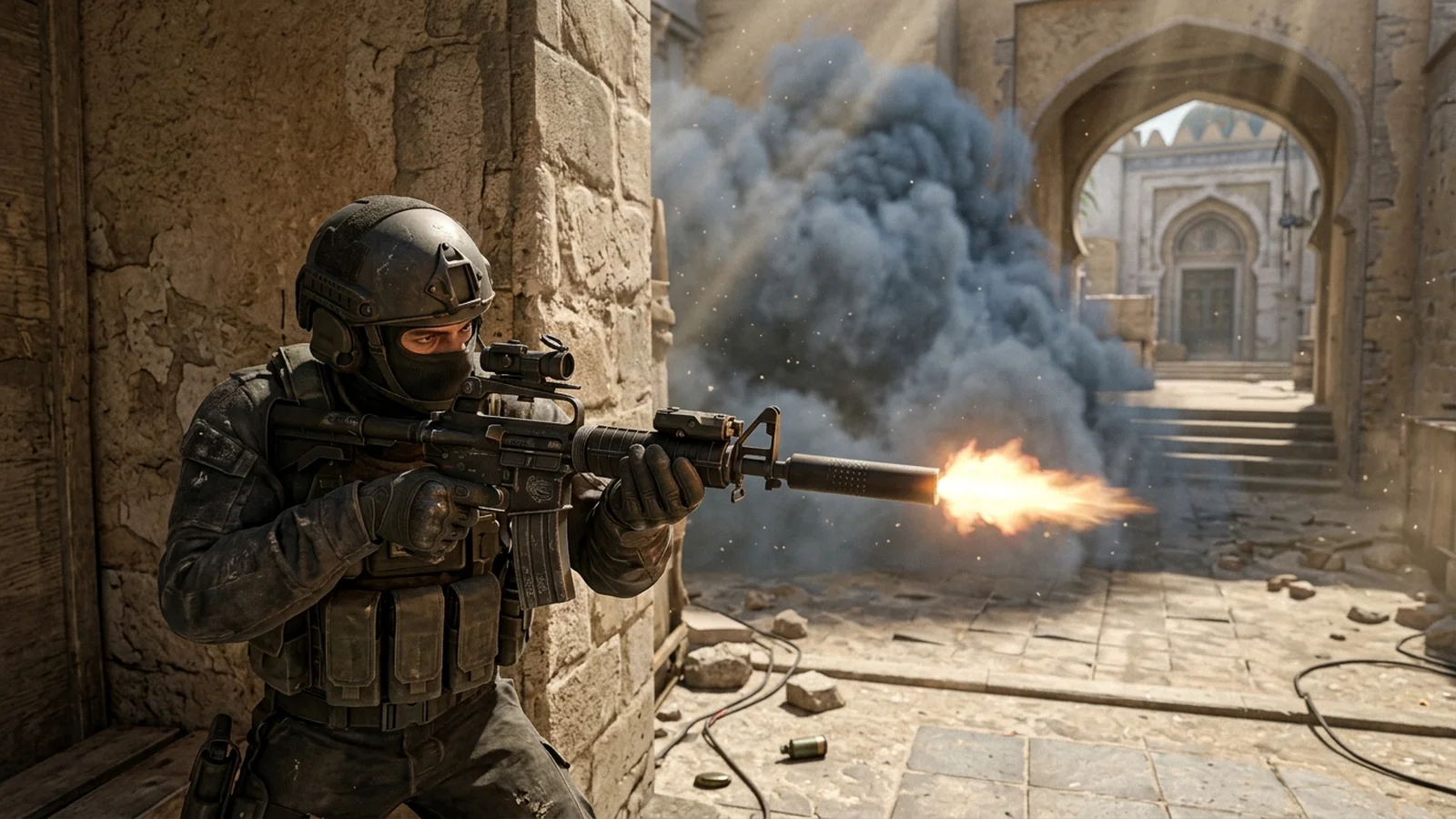 FIELD MANUAL 02
CS2 utility planning, site executes and retakes
A site plan should answer where the team gains space, which defenders are isolated and how the bomb is protected. Memorised throws help only when they serve those decisions.
Read the illustrated guide ↗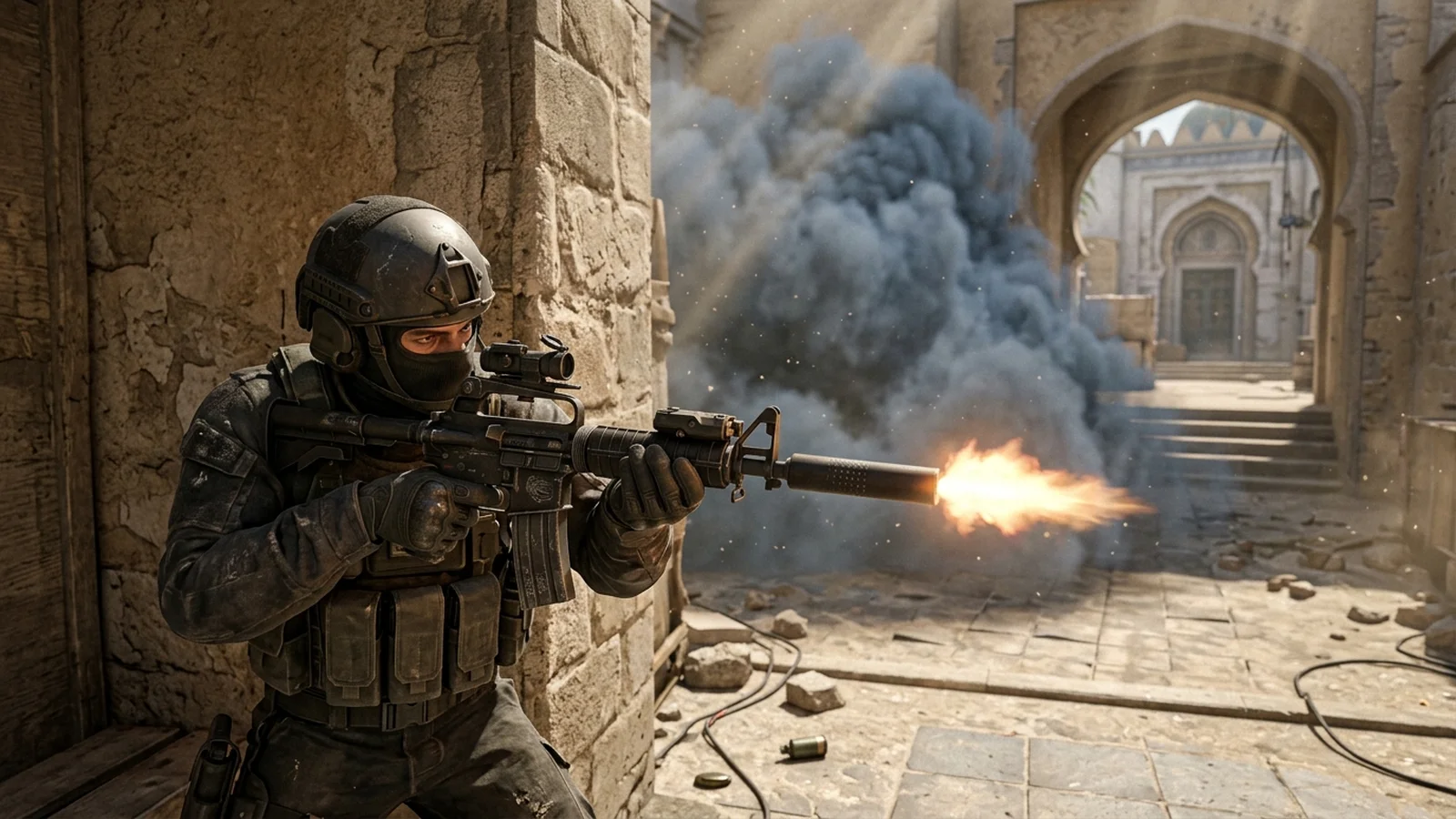 FIELD MANUAL 03
CS2 demo review and map-veto reading
A map veto tells you the battlegrounds selected for a series. It does not produce a win probability by itself. Use it to choose what to watch in the actual rounds.
Read the illustrated guide ↗Roles and responsibilities
These are useful ways to describe the work a player performs. They are not rigid labels, personal rankings or claims about the current professional meta. Event format, team composition and the game state can change who performs a job.
| Role or task | What to look for |
|---|---|
| Entry | Take the first contact with a trade partner close enough to respond. |
| Trade player | Punish the defender who fights the first attacker. |
| AWPer | Control useful sightlines while respecting utility and economy. |
| Lurker | Pressure a separate route without losing connection to the team plan. |
| In-game leader | Coordinate routes, timing, utility and buy decisions. |
1. CS2 trading, spacing and crosshair placement
Aim becomes useful when your teammate can survive or trade the same contact. This guide connects crosshair preparation with distance between players and the order in which angles are cleared.
Keep the crosshair where a defender is likely to appear at the next corner. Avoid sweeping several angles with no commitment. Before entering a room, identify which line can see you first and use the map geometry to reduce simultaneous exposures.
A flash or smoke should create a specific opening. Name the angle it covers and who moves as it takes effect. Throwing utility and waiting until the opportunity expires spends a resource without gaining space. Communicate the intended route before the throw.
Avoid: Judging an entry player only by deaths while ignoring trade opportunities.
2. CS2 utility planning, site executes and retakes
A site plan should answer where the team gains space, which defenders are isolated and how the bomb is protected. Memorised throws help only when they serve those decisions.
Start with a route, not a list of grenades. Decide which section of the site must become safe for a plant and which defender sightline must be blocked. A smoke that leaves the team trapped at the entrance is visually impressive but tactically incomplete.
Plant location determines what positions can defend it. Choose angles that let teammates support one another and preserve information. Taking a distant duel can remove the only player who can see the bomb, even if that duel looked favourable in isolation.
Avoid: Copying a lineup without learning its purpose or failure condition.
3. CS2 demo review and map-veto reading
A map veto tells you the battlegrounds selected for a series. It does not produce a win probability by itself. Use it to choose what to watch in the actual rounds.
Check the organiser’s map pool, series format, veto order and side-selection rules. They can differ across events or change over time. Do not apply a remembered veto graphic to a new tournament without confirming the relevant rulebook.
Review one issue such as failed trades, utility arriving late or losing bomb control. Pause before contact and note what the players could know at that moment. Watching every round at full speed often produces impressions rather than a specific improvement.
Avoid: Confusing cumulative round advantage with the best-of-series score.
More from the existing guide library
How to read a Counter-Strike 2 match
- Team buy quality, not just one rifle
- Space created by utility
- Trades, bomb position and remaining time
Before following the result, confirm the event, selected game version, scheduled time and match format. A best-of-series score is different from an individual map or game score. Some event formats add further conditions, so the organiser’s rules take precedence over assumptions drawn from a familiar tournament.
Choose one sequence and pause before the important decision. Identify which players can participate and what information is actually available. Then describe the consequence: a safer route, a resource spent, access to the objective or a lost opportunity. This produces a useful explanation without turning a small sample into a prediction.
Open the game-specific match centre below, the team directory or the tournament directory for available records. Historical data and missing fields have limits; a missing match is not a claim that the game has no active competition.
Counter-Strike 2 questions
Where should a beginner start?
Read the first field manual and identify the roles or tasks in one recorded game. Learn the objective before copying a professional setup. Once you can explain why a player acts, move to the preparation and review lessons.
Are these live patch rankings?
No. The library teaches decision-making. Check current publisher notes and the event rulebook for exact timings, costs, restrictions, map pools and formats. We do not present a permanent best build or guaranteed winning strategy.
Why can the match centre be empty?
It only displays records available in the provider snapshot. Coverage is not exhaustive. Live and upcoming records also depend on freshness checks. Use the publisher or tournament organiser to confirm an event outside that coverage.
Can I use the diagrams as map layouts?
The diagrams are editorial checklists. They show the order of learning and decision checks; they are not official maps, gameplay screenshots or evidence of an experiment.
Scope and limitations
- Examples are illustrative teaching scenarios, not claims of hands-on match testing or guaranteed outcomes.
- Balance changes and event settings can change the correct implementation; confirm the current rules before using a fixed build or sequence.
- The match centre shows only available provider records. Missing information is not evidence that no tournament or match exists.
Sources and editorial method
Counter-Strike 2: official publisher reference establishes the game context. The practice checkpoints and examples are original editorial analysis prepared with AI assistance. Diagrams are educational artwork, not evidence of a played match. For match times, event formats and restrictions, use the current organiser announcement. See our match-data method and editorial standards for attribution and data limits.
 Galorys
 paiN
 Four Magic
 Aurora Young Blood
 Hermine Esports Club
 G2 Ares
 Marsborne
 Voca
 Villainous
 BESTIA
 Imperial
 Grêmio Esports
 Yawara Esports
 LAG Gaming
 Detonate
 Iowa Stormboar
 Chicken Coop Esports