
Editorial Disclosure: EsportsSignal publishes independent esports news and tournament reporting. Some pages on this site contain affiliate links to gaming or sportsbook partners; if you use a partner service through such a link we may receive a commission at no extra cost to you. This article contains no sponsored placements, and partners have no influence on our coverage. 18+ Please gamble responsibly.
Premier Esports Betting & Live Streams
Comprehensive tournament coverage for CS2, Dota 2, and LoL with fast payouts.
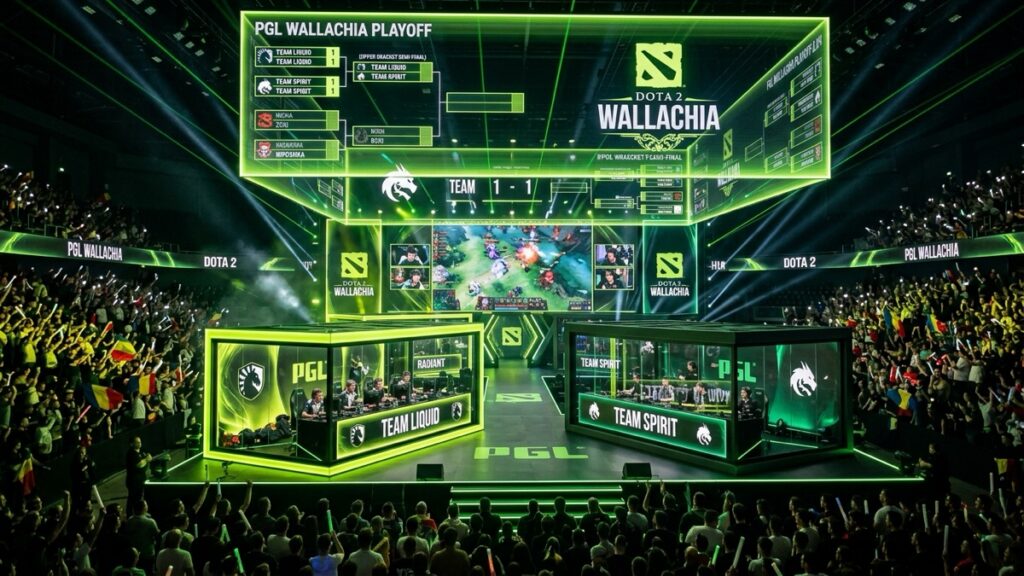
Visit SportsBetting.ag Esports Official Portal →GamerLegion send 1win out in eighth. LGD Gaming sweep Xtreme Gaming. Three series on 26 September redrew the bottom of the bracket.
PGL Wallachia Season 9 is the Dota event that has to fight for oxygen while Shanghai and a Fortnite LAN are on the front page. The 26 September slate still changed the bracket: GamerLegion eliminated 1win in eighth, LGD Gaming swept Xtreme Gaming, and a third series completed a night that the Dota accounts treated as a full reset of the lower half.
For a match-centre site the useful layer is not the recap paragraph, it is the implication for the next two days of start times. Sweeps pull the following series forward. Three-game series push them. Wallachia is exactly the kind of event where our five-minute PandaScore refresh earns the pageview if the homepage module is honest about delays.
Editorial note: snapshot desk. Scores and invitations should be re-checked against the live PandaScore / organizer feed before the article goes live. Do not invent odds.
Tactical Draft Architecture, Lane Assignments, and Mid-Game Map Rotations
In contemporary professional Dota 2 series documented on Liquipedia and OpenDota, Captain’s Mode drafting revolves around securing flexible early-phase support and offlane heroes before revealing core matchups in the final pick phase. Because Hero Facets are locked during the pre-horn strategy phase, coaching staffs prepare distinct lane-equilibrium plans depending on whether their safelane carry faces an aggressive dual-offlane or a roaming position-four support contesting the 3 min Healing Lotus and 6 min Power Rune.
Once the laning stage transitions into early tower pressure around the 10 min catapult wave, the Twin Gate portals located at the corners of the map allow supports to rotate between the safelane and offlane for a mana cost without expending a 100 gold Town Portal Scroll cooldown (80 sec base cooldown). Controlling the enemy offlane Tier-1 tower before 14 min opens direct access to the offlane Wisdom Rune shrine, denying 560 experience at 14 min (and 840 experience at 21 min) while establishing forward observer ward vision around the Tormentor reflector and Roshan pit entrance.
During high-ground sieges past 25 min, disciplined squads avoid forcing Tier-3 tower engagements without an active Aegis of the Immortal (300 sec duration) and a tracked enemy Glyph of Fortification cooldown (300 sec base cooldown, refreshing 1 sec after the first tower of each tier falls). Teams that systematically clear outer Tier-2 towers, claim both 20 min Tormentor Shards (worth 1400 gold each), and force buybacks before committing to barracks sieges consistently dictate series tempo across $1,000,000 USD Tier-1 LAN brackets.
Official Dota 2 Patch 7.37 Objective Rules and Tournament Format Context
Every competitive match analyzed in this report operates under official Dota 2 Patch 7.37 rules and Captain’s Mode draft timers verified on Liquipedia Dota 2 and OpenDota. In standard Tier-1 tournament lobbies, Captain’s Mode allocates an initial reserve time bank alongside structured pick-and-ban phases where each hero selection requires explicit confirmation before the clock expires. Map control revolves around fixed, deterministic objective clocks built into the game client rather than arbitrary guesswork.
Specifically, Healing Lotuses spawn inside the side-lane pools every 3 min, Wisdom Runes materialize at the offlane shrines every 7 min to grant experience to the lowest-level support alongside the collector, and Tormentors spawn at 20 min to award a 1400 gold Aghanim’s Shard upgrade. Roshan occupies the corner pits—shifting from the bottom-right Radiant side during daytime to the top-left Dire pit at night via the Twin Gates—and respawns within an 8 min to 11 min window after being slain. The Aegis of the Immortal remains active in the carrier’s inventory for 5 min (300 sec) before expiring and regenerating the hero.
| Dota 2 Competitive Parameter | Official Rule / Spawn Timer | Gold or Experience Value | Primary Verification Source |
|---|---|---|---|
| Wisdom Rune Spawn Interval | Every 7 min (7:00, 14:00, 21:00) | 280 XP per 7 min elapsed (shared) | Dota2.com Official Patch Notes |
| Tormentor Initial Spawn | 20 min (20:00 game clock) | 1400 gold Aghanim’s Shard value | Dota2.com Official Patch Notes |
| Roshan Respawn Window | 8 min to 11 min post-slay | Aegis duration 5 min (300 sec) | Liquipedia Dota 2 Mechanics |
| Tier-1 LAN Prize Pool Baseline | $1,000,000 USD (PGL / ESL / BLAST) | $250,000 USD (FISSURE PARI Universe) | Liquipedia Tournament Records |
Regional Viewing and Competitive Context for Global / United States
For viewers and tactical analysts in Global / United States following Team Liquid, Sentinels, Cloud9, G2 Esports, and global Tier-1 Major circuits, tracking how rosters synchronize their item timings around the 14 min Wisdom Rune and 20 min Tormentor window provides a reliable way to read mid-game momentum. When evaluating a best-of-three or best-of-five series, always confirm whether a team is fielding its full five-player registered roster or an emergency stand-in via the Teams & Rosters Directory, check live draft progressions on the EsportsSignal Match Centre, and compare historical patch trends on the Meta Analytics Hub.