
Practical guide · Tournament formats
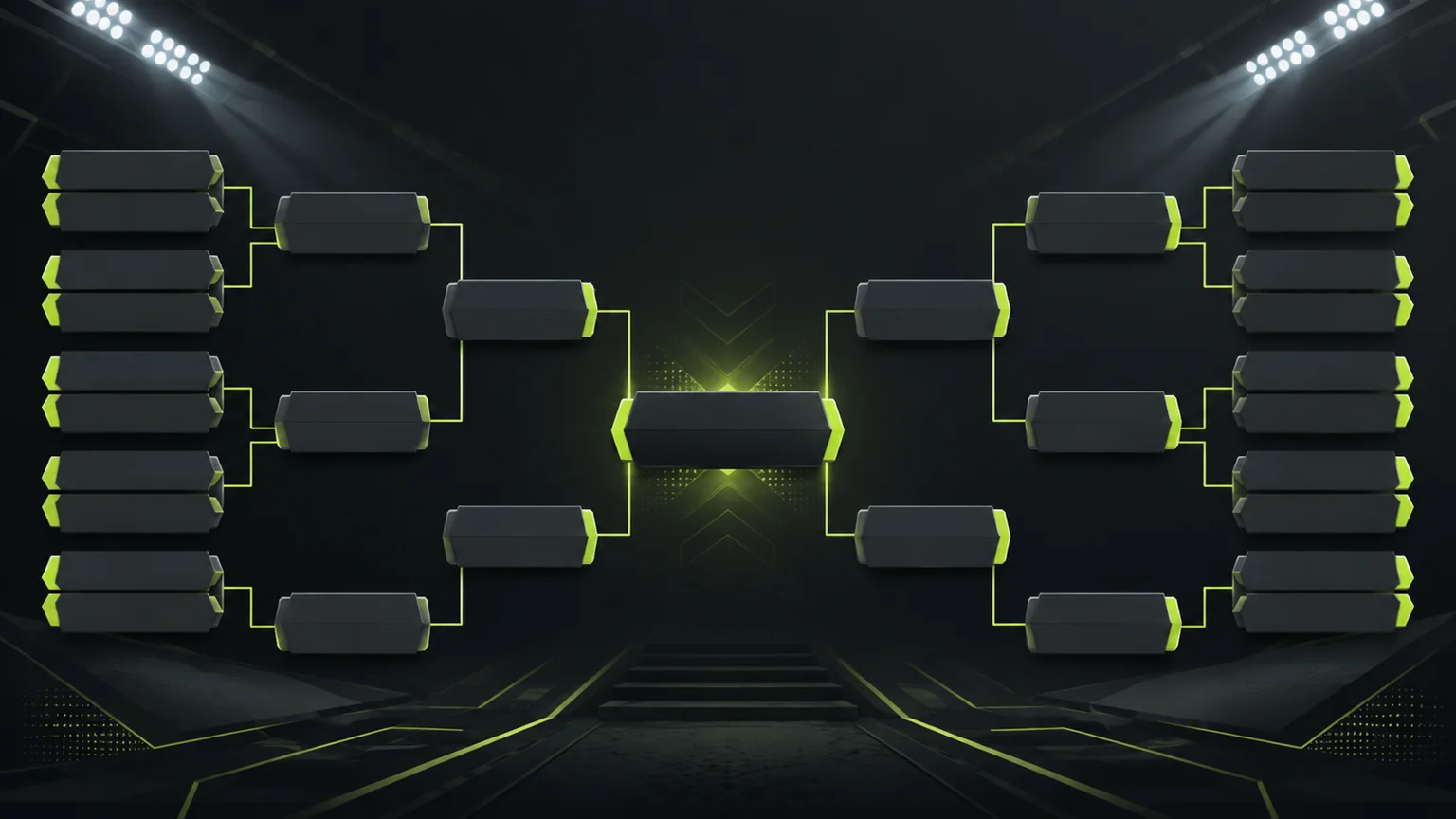
A bracket tells you the route through an event, but it does not always tell you the rules of each match. Read the format and the stage together before deciding whether a team is eliminated. A group-stage loss, an upper-bracket loss and a grand-final loss can have very different consequences.
Start with the stage
Locate the organizer's format explanation, then find the team's current stage. Group tables may send several teams forward, while an elimination bracket describes individual paths. A page headed playoffs can still contain upper and lower sections. Do not infer a team's exit from a red result alone.
Follow the next connection
In single elimination, losing a completed match normally ends that bracket run. In double elimination, an upper-bracket loss normally moves the team into a lower path; the exact final structure remains organizer-specific. Follow the connecting line or next-match label rather than guessing from seed numbers.
Separate match length from format
Best of three means a side normally needs two game or map wins; it does not mean three tournament lives. A best-of-five series can finish after three games. Walkovers, penalties and format exceptions belong in the organizer's rules and may make a displayed score unusual.
A practical reading check
Write down the current opponent, stage, series length and next destination after a win or loss. If the destination is unclear, leave it unconfirmed. For a watch plan, save the organizer schedule and recheck near the match. Brackets can change after postponements or administrative rulings; a copied screenshot may no longer describe the live event.
Work through a fictional bracket
Imagine an eight-team event whose rules explicitly call the playoffs double elimination. Your team loses its opening upper-bracket match. The next useful question is not whether the team has a losing record; it is where that specific loss sends it. Find the corresponding lower-bracket fixture and identify its opponent or qualification placeholder. If the graphic merely says loser of match two, follow that reference rather than guessing a team. Later, a lower-bracket defeat normally ends the run, but any disputed or administratively awarded result still needs the official event decision. This example describes a reading method, not the format of a named current tournament.
Read seeds without turning them into forecasts
Seed numbers describe placement under a tournament system. They may reflect qualification, rankings, regional allocation or a draw, and the method can differ between events. A higher seed is not a guaranteed stronger team in the next series. If you mention seeding in a preview, link the organizer explanation and say what it represents. Do not use the visual position of a team in a graphic as evidence that it is the favorite. Upper and lower placement can simply be a layout decision. Your note should explain the route that the bracket establishes, while any performance analysis belongs in a separately sourced discussion.
Build a four-column viewing sheet
Use four columns: match identifier, stage, scheduled time and next destination. Under next destination, write the match identifier that follows a win and the destination that follows a loss. Add a fifth note only when an exception matters, such as a final with special rules. This small sheet makes it easier to follow several streams without copying an entire bracket. Keep the source URL and update time above the table. When the organizer moves a fixture, change that row and mark the old time as superseded rather than leaving two apparently current appointments.
Common questions about progression
Does every double-elimination final reset? Do not assume so; the organizer must specify the grand-final treatment. Does an upper-bracket team always have an extra map advantage? Again, read the event rules. Does a blank opponent mean the game is cancelled? Usually it means the entrant has not yet been determined, but the page status should confirm that interpretation. These distinctions matter because a generic explainer cannot substitute for a tournament-specific rulebook. If the rules and bracket seem inconsistent, quote the limited conflict in your notes and wait for the organizer clarification instead of designing an unofficial correction.
Use the bracket in a recap
After the event, describe the path using completed results and the actual stage names. A statement that a team reached the final through the lower bracket is more informative than saying it survived several losses, especially when that wording would be mathematically wrong. Link the final bracket record and retain the date you checked it. If the live graphic has been replaced by the next event, use the organizer archive. Do not fabricate a missing playoff stage from memory. A concise recap with a reliable source remains useful after the live interface changes.
Make the bracket readable without the graphic
When sharing a bracket with someone using a small screen or a screen reader, add a short text description of the current path. Name the stage, both competitors and what happens next. Do not rely on a color legend that disappears when an image is copied. A useful description might say that Team A has reached an upper semifinal and that the losing side moves to a specified lower-round match. Keep this conditional until the organizer confirms the result. If the next opponent is unknown, write to be determined rather than guessing from the favorite. This text version also exposes mistakes in your own interpretation: if you cannot describe where the loser goes, revisit the format page. Save the link beside the description so a reader can inspect any later changes.
Related reading and sources
Continue with Tournament directory and Match centre. Reference: Official LoL Esports schedule, checked 7 September 2026. The workflow above is editorial guidance; examples are hypothetical and are not reported test results.
This article does not sell a VPN. Match intel stays on /matches/. If you still want one cashier, open the GG.BET partner check. No operator hop on this page.
Fiat rails named on the partner check, not here: Visa, Mastercard, Skrill, Neteller and SEPA. This desk did not deposit on 13 September 2026.
Cons / limitations
- Graphics omit loser destinations. A pretty bracket PNG that does not name the lower-bracket next match is not a format document.
- Seed is not a forecast. Visual position on a graphic is a layout choice.
- Grand-final reset is not universal. Assuming a reset without the rulebook will mis-state who is eliminated.
Desk metrics (13 September 2026)
- Format pages opened this wrap: organizer format box plus this guide — 2 documents in 8 min.
- Time to write the four-column viewing sheet (match id, stage, time, next destination): 6 min.
- Hypothetical brackets constructed as method examples: 1 fictional eight-team. Not a live event.
- Prize USD: none.
- Operator hops on this page: 0.
FAQ
Does every double-elim final reset? Only if the organizer says so.
Is a red result always elimination? No. Stage and format decide that.
Should I copy a screenshot? No. Recheck the live official bracket.